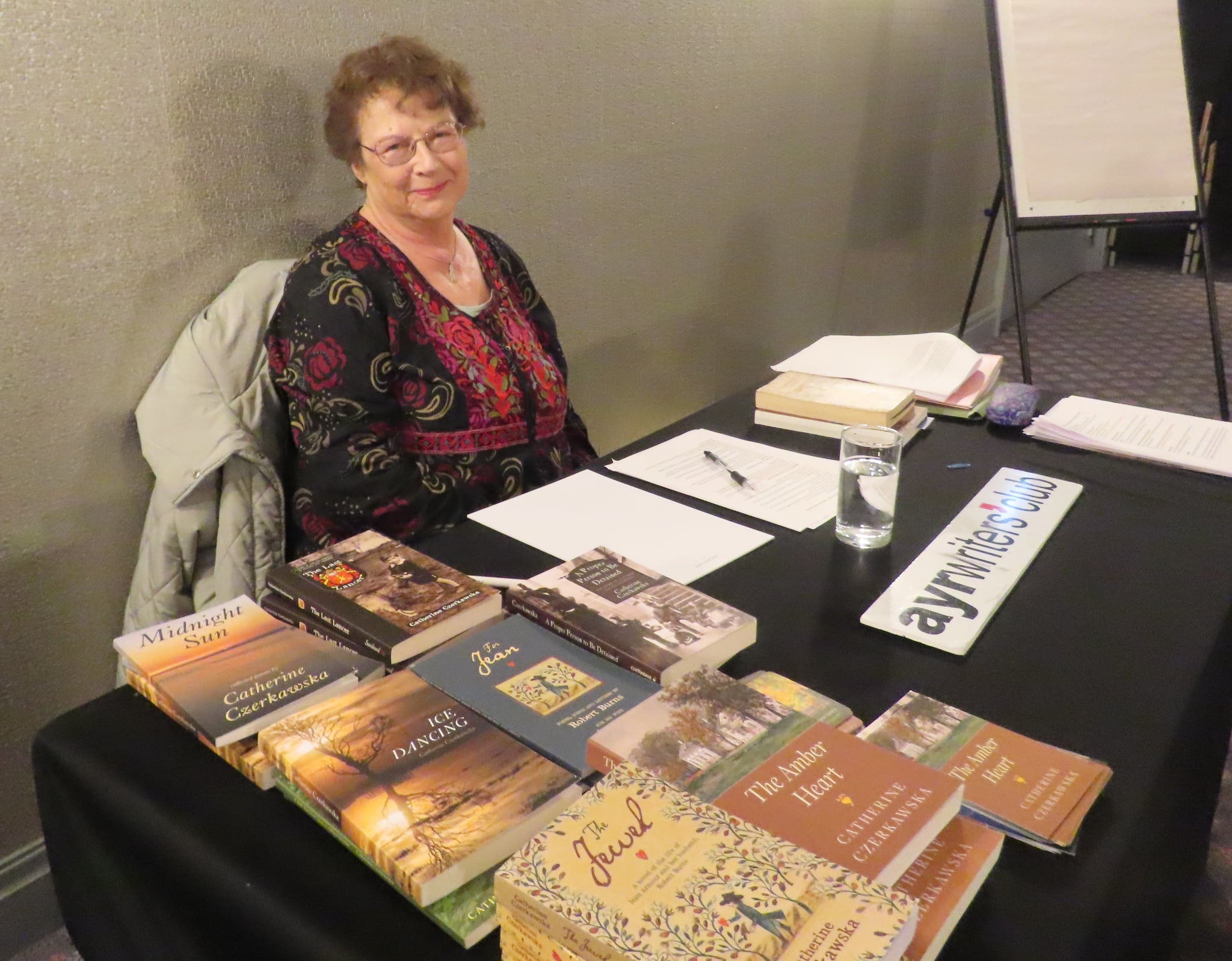
 Playwright and author of both historical fiction and non-fiction, Catherine Czerkawska gave us a fascinating insight into her writing process. Perhaps her history degrees give her a slight edge on the rest of us when it comes to research, which she thoroughly enjoys. Often the research throws up intriguing , though not strictly relevant lines of enquiry, making it difficult to climb out of the tab it-hole and actually start writing the book!
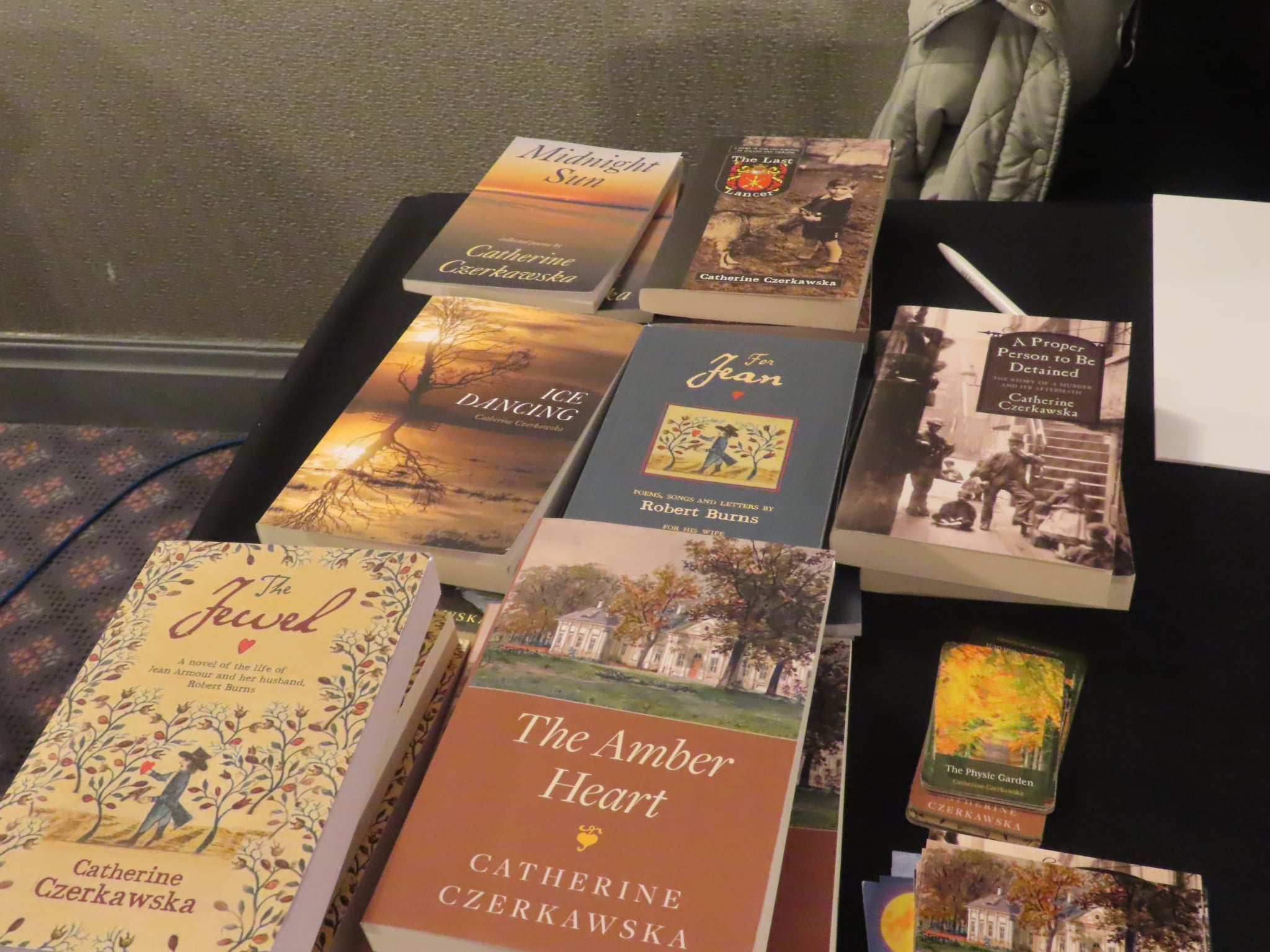 However, research, she insists, is just the raw material. It is the story and the emotional truth that makes a readable historical novel. Other tips include avoiding the temptation to try to cram in all that wonderful information you have gathered. Only put in what your character would notice. (I like that idea!)
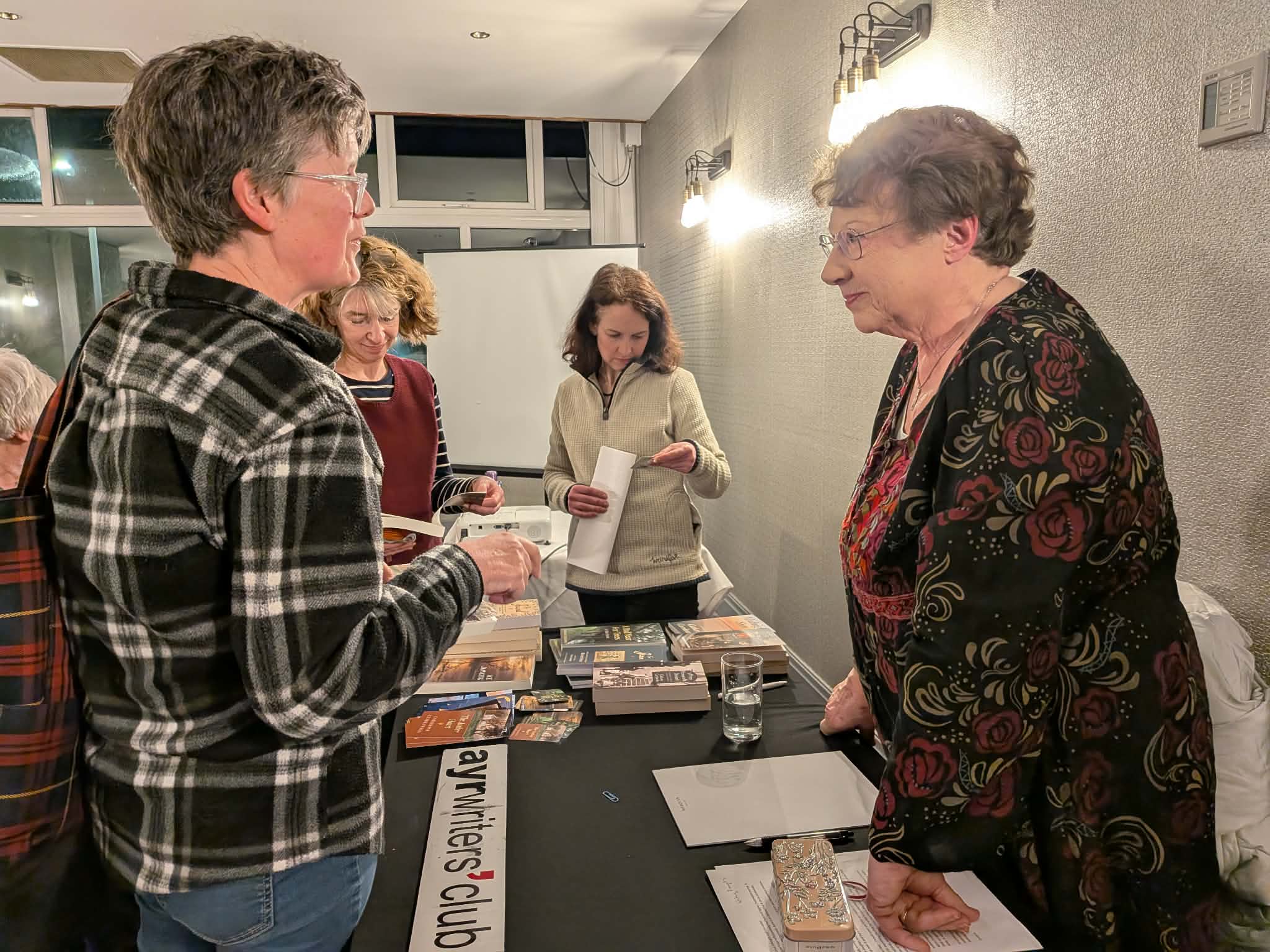 Dialogue is an excellent vehicle to inform and move the story forward but give your reader credit for being able to read between the lines, even when characters don’t always say what they actually mean.
 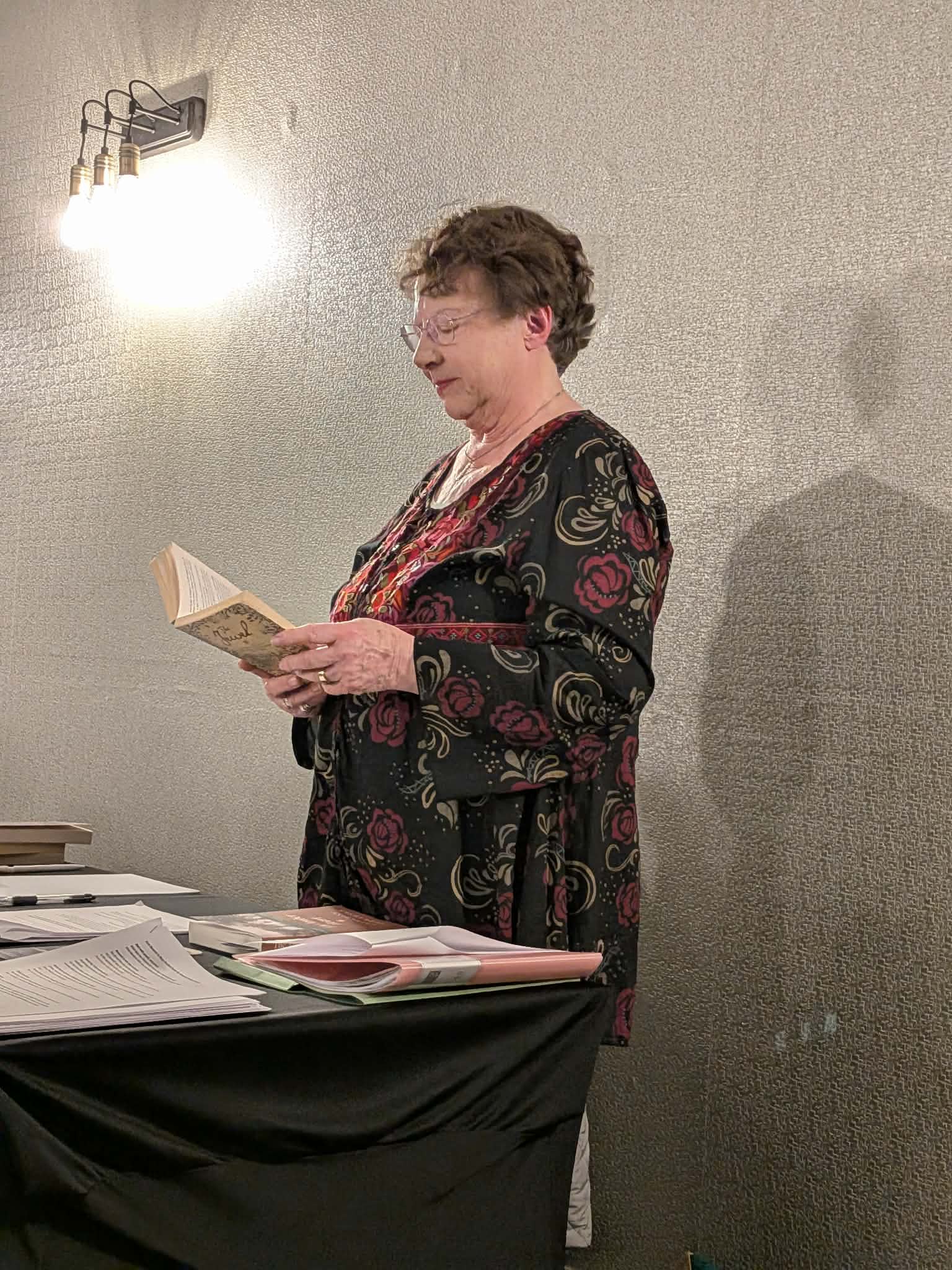 Catherine read an extract from her book ‘The Jewel’ as an example. She was attracted to Jean as a character, as she felt her role in the creative as well as the personal life of Robert Burns had been overlooked. Buns’ letters to Jean show her importance to him. (Another tip – always go for primary sources rather than later opinions) Catherine advises against trying to make dialogue sound too archaic but obviously don’t use contemporary slang.
 Catherine also read an extract from ‘Bloodlands.’ This is set in what was eastern Poland but is now part of Ukraine. It is based on part of her own family history. A word of waarning- when fictionalising real people, be aware that their descendants may take exception to their ancestors being portrayed in a less than favourable light!
On that cautionary note, I will finish! Thank you Catherine for a really great evening.
 Thanks to Carolyn for an entertaining Last Word and to Helena for an excellent vote of thanks.
Maggie Bolton